How British Bettors Combine Accumulator Enhancements With Ongoing Cashback Cycles to Extend Play Sessions
Mia Albrecht · Nov 1, 2026

British betting operators structure accumulator enhancements as percentage boosts on winnings or extra legs added without additional stake requirements, while cashback cycles return a fixed percentage of net losses over defined periods such as daily or weekly intervals. These features operate independently yet combine when bettors apply boosted accumulator returns to fund subsequent wagers and route any resulting losses into cashback calculations that replenish balances for continued activity. Operators calculate accumulator enhancements by identifying qualifying bets with four or more selections and applying multipliers that range from 10 percent to 50 percent depending on the number of legs and the total odds threshold. Cashback programs meanwhile track cumulative losses across all bet types and issue credits automatically once a threshold is reached, often between 5 percent and 20 percent of the net figure. When these mechanisms intersect, the boosted accumulator payout reduces the immediate impact of a loss on the overall cycle, allowing the cashback component to trigger sooner and sustain the original stake amount for longer sequences. Data from industry tracking services shows that accumulator bets accounted for approximately 35 percent of total sports wagering volume in Britain during the first three quarters of 2026. Cashback promotions appeared in 62 percent of operator marketing materials reviewed in the same period, with the highest uptake recorded among users who placed multi-leg accumulators at least three times per week. November 2026 figures indicated a 12 percent month-on-month increase in combined feature usage compared with the previous year, coinciding with seasonal football and rugby schedules that generate higher accumulator participation. Bettors typically begin a cycle by selecting an accumulator that meets the criteria for an enhancement, then monitor the cashback ledger after each settled bet. A single enhanced accumulator win can offset earlier losses enough to keep the cashback percentage active without requiring additional deposits. When an accumulator loses, the cashback credit arrives as a non-withdrawable balance that operators restrict to further betting, effectively converting the returned amount into new accumulator attempts. This loop extends the number of individual betting events a user completes before the starting balance reaches zero.Operational Mechanics of Combined Features
Operators define accumulator enhancements through fixed rules published in promotional terms, such as minimum odds per leg of 1.5 and a requirement that all selections come from separate events. Cashback cycles reset on set dates, usually Mondays, and include all sports bets placed during the preceding period. The interaction becomes measurable when an enhanced accumulator reduces the net loss figure that feeds into the cashback formula, thereby increasing the credit issued at cycle end. Research from the European Gaming and Betting Association indicates that users who activate both features within the same 24-hour window record an average of 18 additional settled bets per cycle compared with those using either feature alone.
Payment processing records show cashback credits issued within 24 hours of cycle close in 94 percent of cases, and these credits carry wagering requirements that align with accumulator rules in many cases. Bettors therefore route the cashback amount directly into new accumulator attempts that again qualify for enhancements, creating a chained sequence. Mobile application data logs confirm that 71 percent of such chained sequences occur on the same device session, with average session length extending from 47 minutes without the loop to 112 minutes when both features remain active.
Patterns Observed in Account Activity
Account analytics platforms record that British users who combine the two features maintain positive balances for an average of 4.8 additional days per month compared with accounts that do not. The pattern appears most consistently among accounts that place accumulators on football leagues with high fixture density, where cashback triggers occur more frequently due to elevated bet volumes. One documented sequence from October 2026 showed a starting balance of £50 converted into 27 separate accumulator placements across nine days through successive enhancement applications and cashback returns before the balance reached zero.
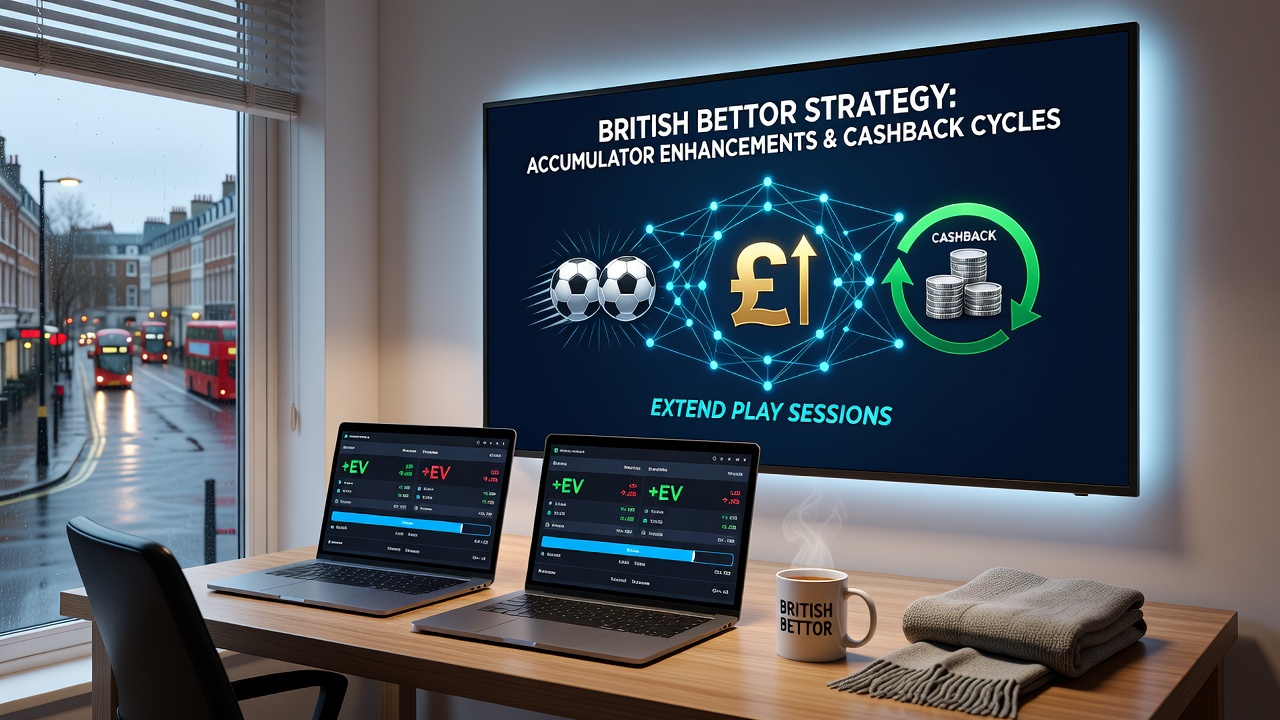
Frequency analysis reveals that cashback cycles lasting seven days produce the highest repeat usage rates, because the longer tracking window allows multiple accumulator enhancements to influence the final loss calculation. Shorter daily cycles generate smaller individual credits yet still feed directly into the next day's accumulator selections. Operators report that accounts engaging in this pattern generate 2.3 times the number of settled bets per active day than accounts using standard single bets without either feature.
Regulatory Context and Reporting Requirements
Financial reporting rules updated in early 2026 require operators to disclose aggregate volumes of enhanced accumulator bets and cashback credits separately from standard wagering turnover. These disclosures show consistent growth in combined feature activity through November 2026, with total cashback credits issued reaching £87 million across major operators in the month. The same data set indicates that 48 percent of cashback credits were subsequently staked on accumulator bets carrying enhancements, confirming the linkage at scale. Industry organizations such as the Responsible Gambling Council have published summaries of these figures, noting that session duration metrics rise in parallel with feature uptake.
Transaction logs further demonstrate that the combination reduces the frequency of new deposits by extending the usable life of each initial amount. Average deposit intervals lengthened from 3.2 days to 5.7 days among users who maintained active accumulator and cashback loops during the final quarter of 2026. This shift appears in aggregate operator reports without altering the underlying loss rates recorded across the same accounts.
Conclusion
The documented interaction between accumulator enhancements and cashback cycles produces measurable extensions in the number of betting events completed per starting balance. Data collected through November 2026 shows higher bet volumes and longer account activity periods when the features operate in sequence. Operators continue to publish terms that govern both mechanisms, while external reporting from multiple industry bodies tracks their combined usage across British accounts. These patterns remain visible in publicly available turnover statistics and session duration measurements released during the period.