Cashback Mechanisms Reshape Accumulator Performance Across Digital Sportsbooks
Ulrich Richter · Sep 20, 2026
Cashback Programs Shift Accumulator Dynamics in Digital Sportsbooks
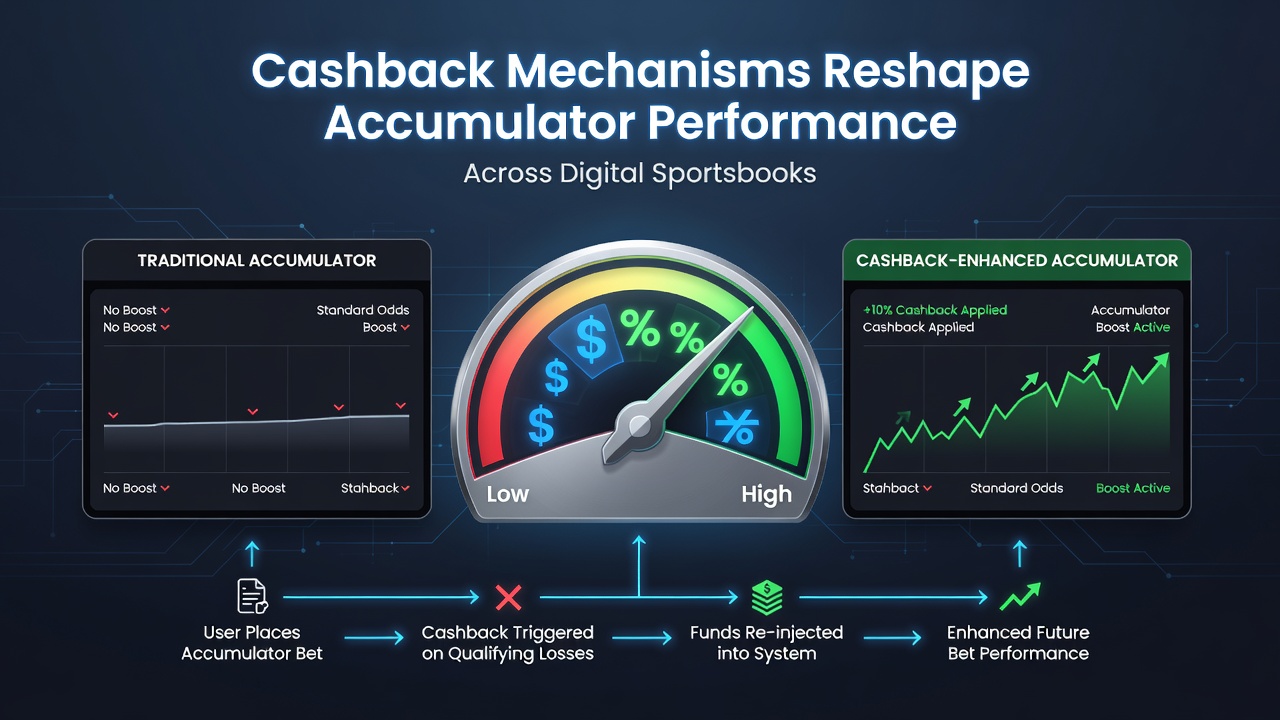
Digital sportsbooks have integrated cashback systems that return a percentage of losses on multi-leg accumulator bets, and these mechanisms now influence how bettors structure their selections and manage overall returns. Accumulators combine multiple outcomes into a single wager with multiplied odds, yet they carry higher risk because one incorrect result voids the entire ticket. Cashback features offset portions of those losses by crediting accounts based on turnover or net loss thresholds, which alters the effective performance metrics of such bets. Operators track accumulator volume through internal analytics, and reports from the American Gaming Association indicate that cashback-eligible markets grew by 14 percent in the second quarter of 2026. This growth coincides with platform updates that automatically apply cashback to accumulator tickets meeting minimum stake requirements. Bettors therefore adjust their strategies by selecting more legs or higher odds because partial loss recovery reduces the net downside.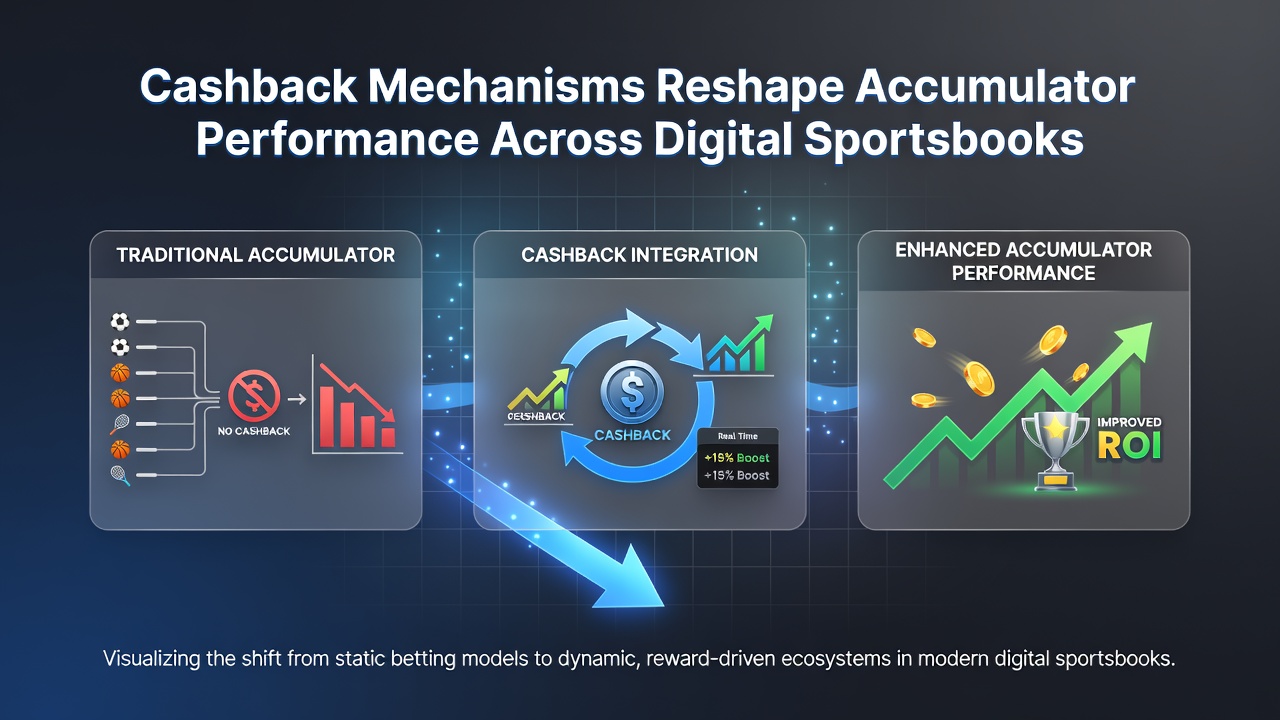 Operators in Australia implemented daily cashback caps that reset at midnight local time, and this structure prompted bettors to spread accumulator activity across multiple days. The approach prevents rapid exhaustion of weekly limits while maintaining consistent engagement. Those adjustments appear in aggregated reports from state regulatory bodies, which record steady month-over-month growth in accumulator-related cashback payouts.
Digital sportsbooks have integrated cashback systems that return a percentage of losses on multi-leg accumulator bets, and these mechanisms now influence how bettors structure their selections and manage overall returns. Accumulators combine multiple outcomes into a single wager with multiplied odds, yet they carry higher risk because one incorrect result voids the entire ticket. Cashback features offset portions of those losses by crediting accounts based on turnover or net loss thresholds, which alters the effective performance metrics of such bets. Operators track accumulator volume through internal analytics, and reports from the American Gaming Association indicate that cashback-eligible markets grew by 14 percent in the second quarter of 2026. This growth coincides with platform updates that automatically apply cashback to accumulator tickets meeting minimum stake requirements. Bettors therefore adjust their strategies by selecting more legs or higher odds because partial loss recovery reduces the net downside.Mechanics Behind Cashback Application
Cashback calculation typically uses a sliding scale tied to weekly or monthly loss totals, and accumulators often qualify at higher percentages than single bets because they generate greater handle. A sportsbook might return 10 percent on losses exceeding 500 units when the wager contains four or more selections, while single bets receive only 5 percent. This differential encourages volume in accumulator products without changing the underlying odds. Platforms deploy real-time tracking that displays projected cashback alongside potential payout figures, and users review these projections before confirming tickets. The display updates dynamically as legs are added or removed, which lets bettors optimize the balance between risk and recoverable loss. Data from industry platforms shows that average accumulator length increased from 3.8 legs to 5.2 legs during the first half of 2026 among users enrolled in cashback programs.Regional Variations and Platform Adaptations
European operators introduced tiered cashback tiers that reward loyalty points earned exclusively through accumulator play, whereas North American platforms emphasize instant cashback credited within 24 hours of settlement. A study published by the University of Nevada, Las Vegas gaming research center examined transaction logs across multiple jurisdictions and found that cashback participation correlated with a 22 percent rise in accumulator handle during September 2026. The same analysis noted that average stake sizes remained stable, suggesting the increase stemmed from more frequent betting rather than larger individual wagers.
Operators in Australia implemented daily cashback caps that reset at midnight local time, and this structure prompted bettors to spread accumulator activity across multiple days. The approach prevents rapid exhaustion of weekly limits while maintaining consistent engagement. Those adjustments appear in aggregated reports from state regulatory bodies, which record steady month-over-month growth in accumulator-related cashback payouts.